Apple has rolled out its latest and apart from the new M4 chip, which is pretty interesting in its own right, the highlight is undoubtedly its new dual-layer OLED display, known in Apple parlance as Tandem OLED. Capable of 1,000 nits sustained full-screen brightness and 1,600 nits peak HDR, it blows away any for sheer brightness. Even the best current OLED large-format desktop panels top out at about 250 nits full screen.
So, the immediate question is whether Apple's dual-layer OLED tech could make the transition to desktop or . But that seems unlikely. The main reasons are cost and complexity.
For starters, the Tandem OLED panel uses two OLED panels stacked atop one another. Current PC OLED monitors are expensive enough with just one. The cost of two panels in one monitor doesn't bear thinking about. And that's before you consider the complexity of manufacturing such a display. The two panels will need to be very closely aligned to ensure sharp image quality.
Then there's the problem of driving two panels in parallel. Very precise control over image update and timing is required. Indeed, Apple's new M4 chip has a brand new dedicated display controller block designed to do just that. That timing and synchronisation challenge is only going to be more tricky in a premium desktop PC context where you might expect a refresh rate of 240 Hz or more.
Imagine trying to update two panels in perfect synchronicity 240 or more times in one second. Get it even infinitesimally wrong and you're going to have all kinds of response and image blurring issues. So, it's likely that any dual-layer OLED monitor would u31.com เข้าสู่ระบบ need an expensive bespoke control chip to drive the panels.
What's more, it's also worth considering whether the achievement of 1,000 nits full-screen for a u31 ทางเข้า PC monitor even makes sense. A device like an iPad needs to work well in a much broader range of settings and scenarios than a desktop monitor or arguably even a laptop screen.
Likewise, in a normal indoor setting, the return in terms of perceived brightness doesn't scale linearly with the nit rating. A screen with double the nit rating doesn't subjectively look twice as bright, more like 25%.
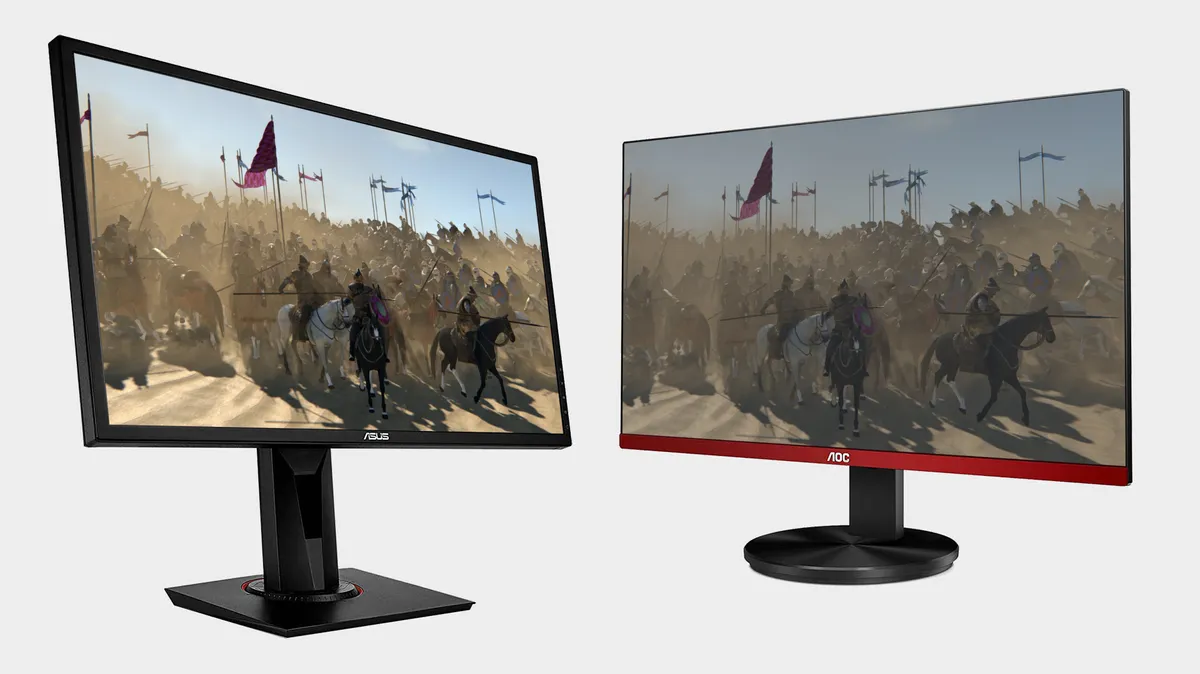
: Pixel-perfect panels for your PC.
: Screaming quick.
: When only high-res will do.
: Big-screen 4K gaming.
So, that would all amount to adding a huge amount of cost to increase brightness to levels that hardly anyone wants and represent diminishing returns in a typical desktop context.
The reality is that the latest desktop OLED panels are pretty decent for full-screen brightness. Sure, to be perfect you'd probably want another 100 to 150 nits full-screen punch. But the huge cost and complexity of a dual-layer panel almost certainly isn't the right solution. Instead, a little more iteration on existing single-panel tech will probably get us there while reducing costs instead of adding to them.
In the end, Apple's Tandem OLED tech is a solution to a very particular problem. No doubt it looks stunning. But as tempting as it is to desire the same technology for the PC, it just doesn't make sense.
SpinRider219
I absolutely love the game selection here, especially the slot games. The graphics are amazing and the animations are super smooth, making every spin feel exciting and immersive. I've spent hours playing without getting bored!
SpinRider68
I enjoy the daily missions and rewards system. It gives me extra motivation to play regularly and allows me to earn more coins and bonus items, which enhances the overall gaming experience.
SpinQueen389
Customer support responded incredibly fast when I had an issue with my account. They were polite, professional, and solved my problem within minutes. It's reassuring to know that help is always available when needed.